
⚠️ OCR transcript failed.
🔒 OCR transcript is available in Standard, Mini, and Pro plans.
View pricingOriginál ()
Překlad ()
AI Analysis • 🤖 Fact Ninja - výchozí
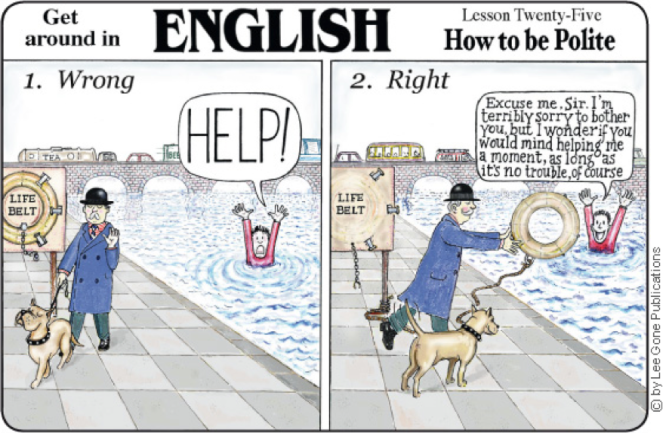
The text is in English. The image is a two-panel comic presented as a "lesson in English" about politeness: on the left is the label "Wrong" with a drowning person shouting "HELP!", on the right "Right," where the same person makes a long polite request and a passerby throws him a life ring. The main intent is a humorous satire on excessive politeness.
- Normative framing "right/wrong": The binary "1. Wrong / 2. Right" creates the impression that there is only one correct way to behave even in an emergency, which is simplistic and can be misleading.
- Appeal to educational authority: The title "Lesson Twenty-Five – How to be Polite" and "Get around in ENGLISH" stylize the comic as educational material, thereby giving the claims unwarranted weight.
- Hyperbole and caricature: The exaggeratedly long polite formulation in a crisis situation is an exaggeration that distorts reality and serves to support the point.
- Cultural stereotyping: Visual and textual elements suggest that a certain culture will only help after the "correct" polite formulation. This is a generalization/stereotype that can reinforce prejudices.
- Implicit victim-blaming: Labeling the call "HELP!" as "Wrong" suggests that a person is to blame for not receiving help if they were not polite enough, which is unethical and potentially dangerous messaging.
- False dilemma: It creates the impression that there are only two ways to ask and only one is acceptable, which is a logical fallacy.
- Visual contrast and hierarchy: The large bubble with the shout and the subsequent "correct" scene with the act of rescue creates a manipulative juxtaposition that evokes the desired interpretation.
- Humor and clear satire: The distinctly comic form without targeting a specific person and without inciting hatred is non-offensive, satirical criticism of social norms.
Overall, it is a satirical visual joke that utilizes simplification, stereotypes, and false dilemmas. It is not political propaganda but cultural exaggeration. Overall assessment of manipulability: moderately manipulative (due to the binary "right/wrong" and stereotyping), yet with a predominantly humorous intent.
Verify image origin
Like this analysis?
To like analyses, please sign in. Create a free account or log in to an existing one.
Likes are a paid feature
Liking analyses and following authors is available on paid plans. Start with the Mini plan.
- Like favorite analyses and revisit them
- Follow interesting authors
- Custom categories and groups