
⚠️ OCR transcript failed.
🔒 OCR transcript is available in Standard, Mini, and Pro plans.
View pricingOriginál ()
Překlad ()
AI Analysis • 🤖 Fact Ninja - výchozí
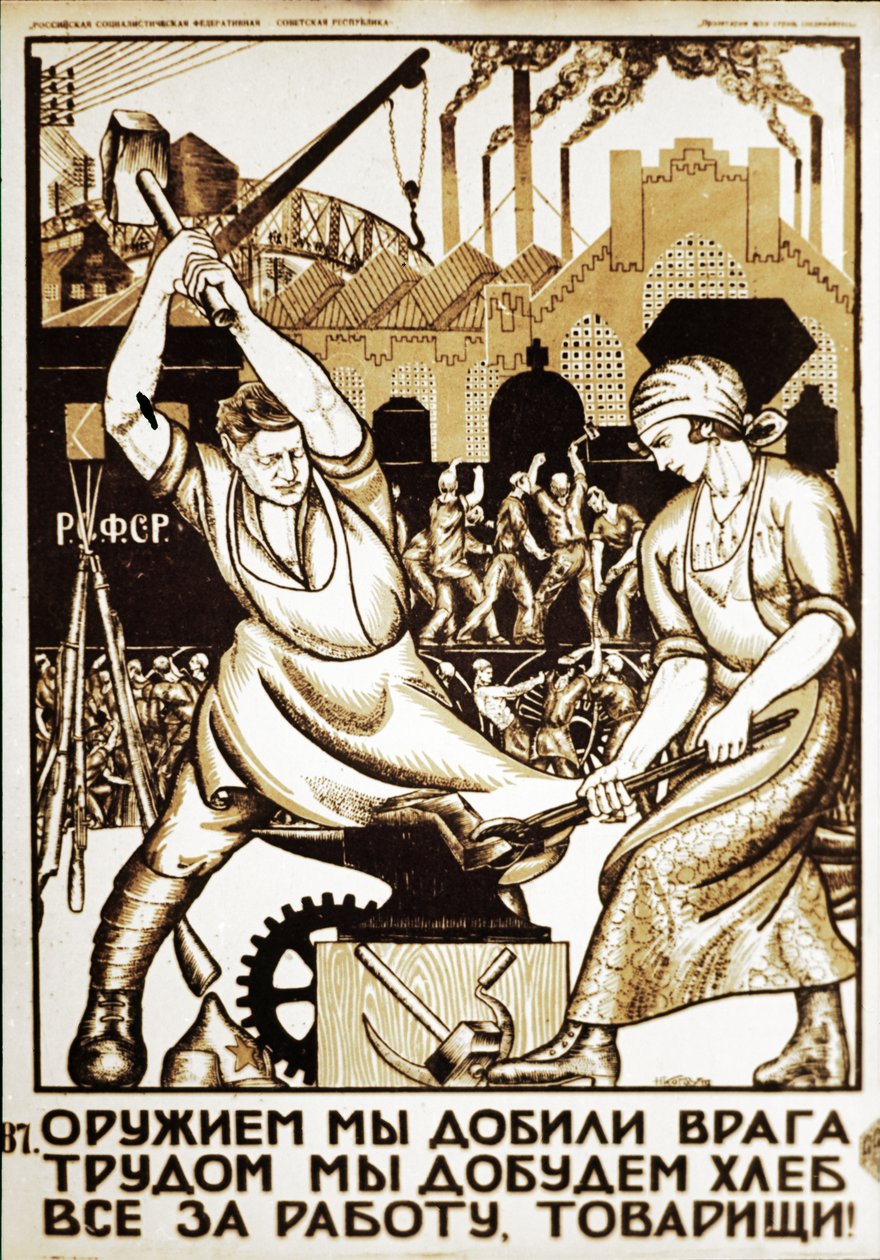
The text is in Russian. The image depicts a political poster with a workers' theme: a prominent worker and a female worker are working with a hammer and pliers in the foreground, with factories, smoking chimneys, and a marching crowd in the background. The main intention is to mobilize the population for post-war/production work and to strengthen loyalty to the regime.
- Imperative call: The slogan “Все за работу, товарищи!” (Everyone to work, comrades!) is a direct mobilization appealing to collective duty and uses an exclamation mark to increase urgency.
- Dichotomy of “us vs. enemy”: The phrase “Оружием мы добили врага…” frames the past as a struggle against the enemy and the present as another front of work. It reinforces polarization and legitimizes discipline.
- Heroization and idealization of the worker: Monumental figures in dynamic gestures with hammers create a cult of the hero and suggest that individual commitment has superhuman strength.
- Glorification of industry and simplification of causality: Smoking chimneys, gears, and tools visually celebrate heavy industry. The thesis “through work we gain bread” offers a simple promise without stating conditions or dates.
- Collectivism and deindividualization: The marching crowd and the designation “comrades” create an impression of unity and consensus, thereby dampening individual doubts and promoting groupthink.
- Appeal to the authority of the state/system: Visible state/revolutionary symbols (the republic's abbreviation, star, factory iconography) lend the message institutional legitimacy.
- Strong emotionalization: Dramatic poses, contrast of light on the figures against a dark background, and the rhythm of marching figures increase emotional tension at the expense of rational arguments.
- Normative gender framing: The man in the role of the striking force and the woman as a supportive collaborator suggest prescribed roles, even though both figures work together.
- Absence of verifiable information: There are no facts, numbers, or specific policies; the message relies on slogans and symbols.
- Positive element: The call to work for recovery can foster solidarity and a common goal, if not accompanied by pressure.
The poster employs typical elements of political propaganda — imperative, heroization, polarization, and collectivist framing — with minimal rational argumentation. Overall assessment: highly manipulative.
Verify image origin
Like this analysis?
To like analyses, please sign in. Create a free account or log in to an existing one.
Likes are a paid feature
Liking analyses and following authors is available on paid plans. Start with the Mini plan.
- Like favorite analyses and revisit them
- Follow interesting authors
- Custom categories and groups