
⚠️ OCR transcript failed.
🔒 OCR transcript is available in Standard, Mini, and Pro plans.
View pricingOriginál ()
Překlad ()
AI Analysis • 🤖 Fact Ninja - výchozí
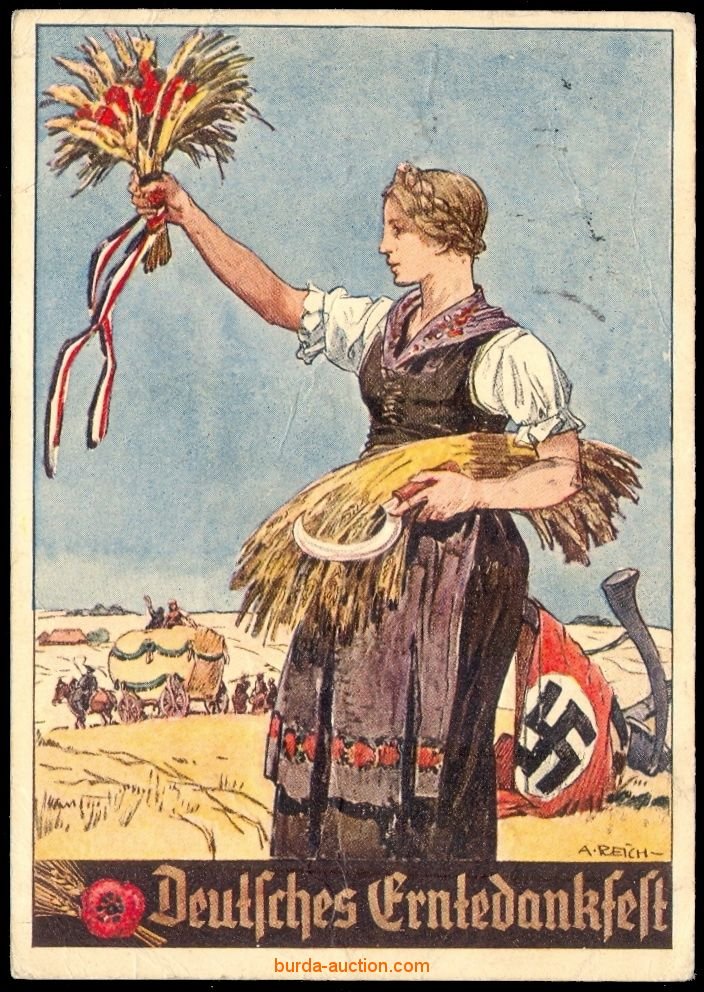
The text is in German. The illustration depicts a poster/promotion card with a rural scene: a figure of a woman in traditional attire raises a sheaf of grain, in the background are carts and at her side lies a flag with the symbol of the swastika. The main intention is to connect the celebration of the harvest with national loyalty and to strengthen the image of cohesion under a totalitarian regime.
- Normalization of extremist symbolism: The prominent placement of the flag with the swastika in a civilian, festive scene makes the ideology a “normal” part of everyday culture.
- Transfer (association of positive values): The joyful gesturing of the figure and the grain symbolizing abundance are transferred to the regime through the presence of its symbols — creating an unfounded connection between prosperity and ideology.
- Idealization of the countryside and “healthy people”: The idyllic harvest without problems represents a romanticized image of reality, intended to evoke pride and loyalty.
- Appeal to tradition and identity: Traditional attire, the sheaf of grain, and Gothic script under the inscription in German reinforce the impression of historical continuity and the “naturalness” of the regime.
- Visual dominance and heroization: The large, central figure towers over the landscape; the flag is compositionally “at the feet,” which heroizes the ordinary person as a bearer of ideology.
- Bandwagon/call for unity: Collective work in the background creates the impression that “everyone is already part of” the common effort — an indirect pressure to join in.
- Gender stereotypes: The depiction of the woman in a predetermined role (caring for the harvest, gratitude) reinforces narrow norms about “proper” social behavior.
- Emotionalization without facts: No specific data or policies are provided, only symbols and feelings of gratitude, which simplifies reality and circumvents rational assessment.
- Euhemerization of the regime: The celebration of the harvest as “gratitude” obscures the repressive nature of power — the positive ritual legitimizes authoritarianism.
- Positive/ethical element: Absence of direct calls for violence or explicit defamation against groups — the message works more with soft, cultural legitimization.
The material is significantly manipulative: it uses associations of tradition and abundance to normalize extremist ideology and build unity without substantive arguments. Overall assessment: highly manipulative.
Verify image origin
Like this analysis?
To like analyses, please sign in. Create a free account or log in to an existing one.
Likes are a paid feature
Liking analyses and following authors is available on paid plans. Start with the Mini plan.
- Like favorite analyses and revisit them
- Follow interesting authors
- Custom categories and groups