
⚠️ La transcripción OCR falló.
🔒 La transcripción OCR está disponible en los planes Standard, Mini y Pro.
Ver preciosOriginál ()
Překlad ()
Análisis de IA • 🤖 Fact Ninja - výchozí
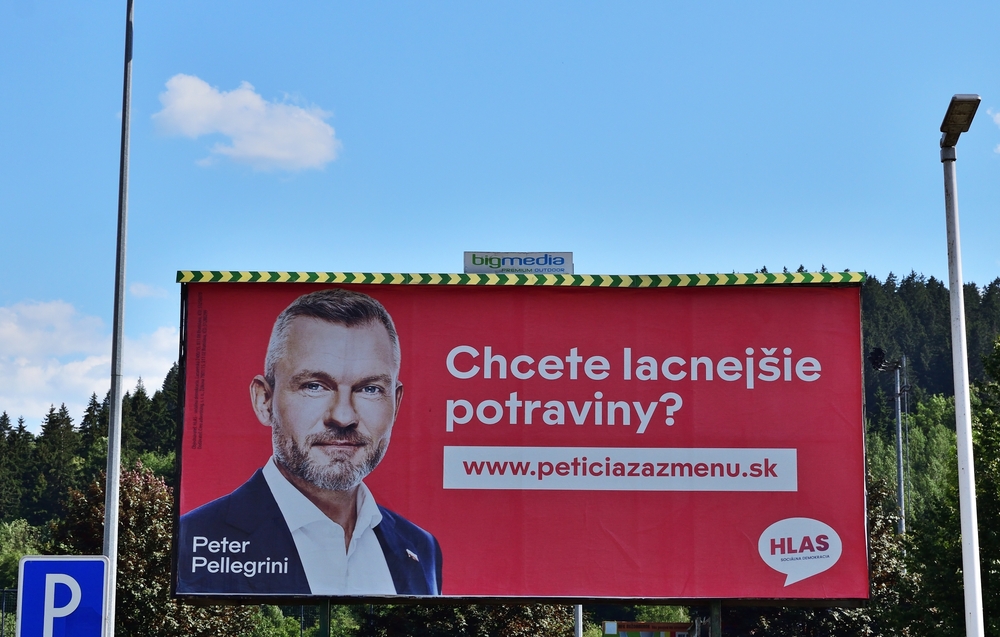
Language: Slovak. The image shows a large roadside billboard with a politician’s portrait on a red background, a bold question about wanting cheaper groceries, a petition website, and a party logo. The main intent is mobilization around a cost-of-living message to drive people to sign a petition.
- Rhetorical question: “Do you want cheaper groceries?” is a leading question designed to elicit agreement and reduce critical evaluation.
- Oversimplification/populist promise: The message implies that signing a petition will result in lower food prices, a simplification of complex economic policy without evidence or mechanisms.
- Call to action: Prominent website link functions as a direct mobilization cue rather than providing information or arguments.
- Appeal to authority/personal branding: A large, polished portrait of the politician conveys credibility and trust, transferring personal ethos to the claim.
- Emotional appeal: The focus on household costs taps into economic anxiety, encouraging support based on feelings rather than detailed policy discussion.
- Visual dominance and color psychology: The red background and high-contrast white text create urgency and attention, a common persuasive framing.
- Single-issue framing: Concentrating solely on grocery prices narrows the agenda and may crowd out contextual factors such as broader economic trade-offs.
- Lack of sourcing/evidence: No data, references, or actionable plan are provided, indicating assertion without substantiation.
- Personalization: The politician’s printed name increases recognition and cultivates identification with a person over policy.
- Civil tone (positive): The poster avoids attacking opponents, hate speech, or fear imagery, and offers a transparent participation route via a website — non-aggressive outreach.
Overall, the billboard relies on emotional and identity-based persuasion with minimal information. Assessment: moderately manipulative — persuasive marketing techniques are present, but the content is not hostile and includes a clear, non-coercive call to participate.
Verificar origen de la imagen
¿Te gusta este análisis?
Debes iniciar sesión para dar me gusta a tus análisis favoritos. Crea una cuenta gratuita o inicia sesión en una existente.
Dar me gusta es parte del plan de pago
Dar me gusta a los análisis favoritos y seguir a los autores está disponible en planes de pago. Comienza desde el plan Mini.
- Dale me gusta a los análisis favoritos y regresa a ellos
- Sigue a autores interesantes
- Categorías y grupos personalizados