
⚠️ OCR transcript failed.
🔒 OCR transcript is available in Standard, Mini, and Pro plans.
View pricingOriginál ()
Překlad ()
AI Analysis • 🤖 Fact Ninja - výchozí
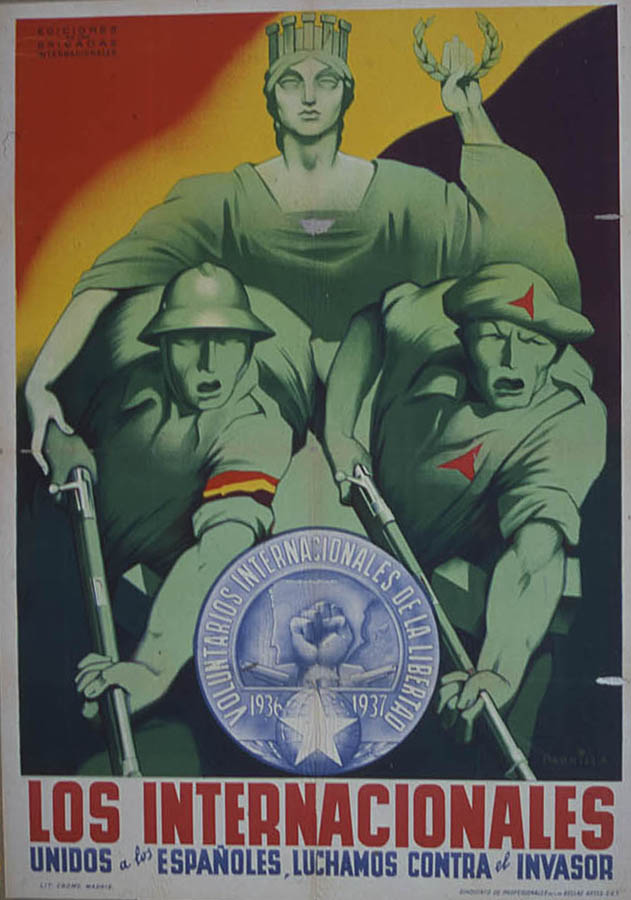
The text on the poster is in Spanish. The image depicts a historical recruitment/propaganda poster: in the foreground, two soldiers march with bayonets and determined expressions, behind them stands a monumental female allegory of freedom with a laurel. The dominant inscription “LOS INTERNACIONALES” and slogans about fighting against the “invader” suggest the main intention: mobilization and legitimization of armed resistance through internationalist solidarity.
- Appeal for unity and the effect of “join the majority”: Words like “UNIDOS … LUCHAMOS” create the impression of a broad, ongoing movement that it is “right” to join.
- Labeling and demonization of the opponent: Referring to the enemy solely as “INVASOR” simplifies the conflict and suppresses nuances; it fosters negative emotions without providing factual details.
- Heroization and mythologization: The protective figure of freedom with laurel and the low angle view of marching fighters evoke a sense of a noble, infallible mission (glorification).
- Transfer of values: The allegory of freedom and the laurel wreath transfer values of “freedom”, “victory”, and “legitimacy” to the depicted fighters without rational justification.
- Strong emotionalization: The emblematic fist, star, and aggressive march with bayonets work with fear, pride, and moral outrage.
- Dichotomous framing of “us vs. them”: The composition and text divide the world into the right side and “intruders”, thus suppressing complexity and rational debate.
- Visual dominance and dynamics: Capital letters, contrasting red in the inscription “LOS INTERNACIONALES”, and striking diagonals of weapons draw attention and increase the urgency of the message.
- Symbolic identification: Colorful insignia on sleeves and geometric symbols on uniforms serve as ideological signals that simply categorize “correct” allies.
- De-individualization of figures: Uniformity, anonymous typified faces, and mass marching reduce individuals to “soldier-targets”, facilitating mobilization and suppressing empathy for the victims.
- Authority of tradition and time: The medal with the text “1936–1937” evokes historical inevitability and continuity of the struggle.
- Relatively transparent sourcing: The mention of “VOLUNTARIOS INTERNACIONALES DE LA LIBERTAD” and dating provide clear origin and purpose of the poster, which is positive from an ethical communication perspective.
- Absence of explicit insults or calls to hatred: Although it uses the term “invader”, the poster does not contain direct insults towards specific groups; this element is relatively moderate.
The poster significantly employs propaganda and mobilization techniques (emotionalization, heroization, labeling, and binary framing). Overall assessment: strongly manipulative, although with a certain degree of transparency of source.
Verify image origin
Like this analysis?
To like analyses, please sign in. Create a free account or log in to an existing one.
Likes are a paid feature
Liking analyses and following authors is available on paid plans. Start with the Mini plan.
- Like favorite analyses and revisit them
- Follow interesting authors
- Custom categories and groups